Showing posts with label soup (Guk or Jjigye). Show all posts

Saturday, March 5, 2011

Crab Bibimbop and Crab Soybean Soup

꽃게된장찌게[kot-gye-dwen-jang-ji-gye]
Sorry for the delay with updating this blog. No excuse except that I just can't remember how the last two months flew by so quickly. As a Korean saying goes, it feels like all things happened in a blink of an eye. Since this is the first blog post for this year, I would like to send a belated wish to everyone a very happy new year! I am sure hearing new year's greeting at this time of the year would again make you think how time had simply jumped from the new year's day.

The weather in the San Francisco Bay Area has been very unpredictable for the past few weeks. We planned a weekend getaway to Monterey in anticipation of nice spring weather, but the weather forecast showed rain and windy so we had to cancel the trip. Then I woke up on Saturday morning only to find a bright sun light on my eyes. So, I was itching to make it a fun-filled weekend regardless of the weather, and decided to throw a house party with friends savoring our 10-legged crustacean friends that thrives in the northern California coast around this time of the year.
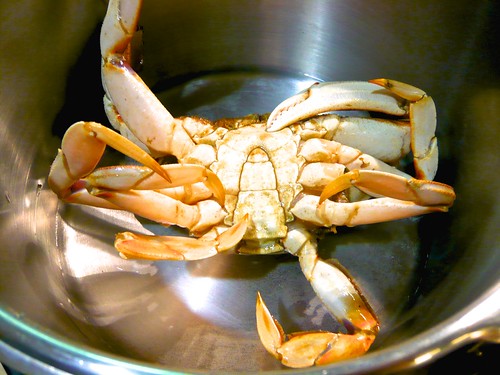
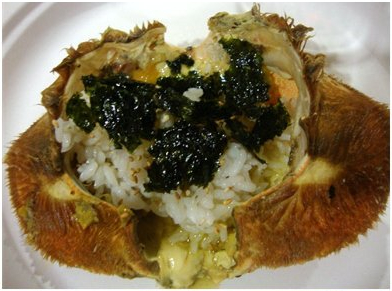

We invited about 10 guests and bought 11 Dungeness crabs, of which we dunked two into soybean soup and steamed the rest to make crab bibimbop. Both of them were big hits. To make crab bibimbop, you first steam crabs upside down (so that the juice stays in the back shell), crack open the shell, and add steamed rice, dry seaweed, a teaspoon of sesame oil and a pinch of sesame seeds into the shell, and then mix them together. This gets you an instant bibimbop right in the crab shell that is full of ocean flavor.

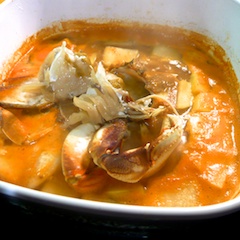
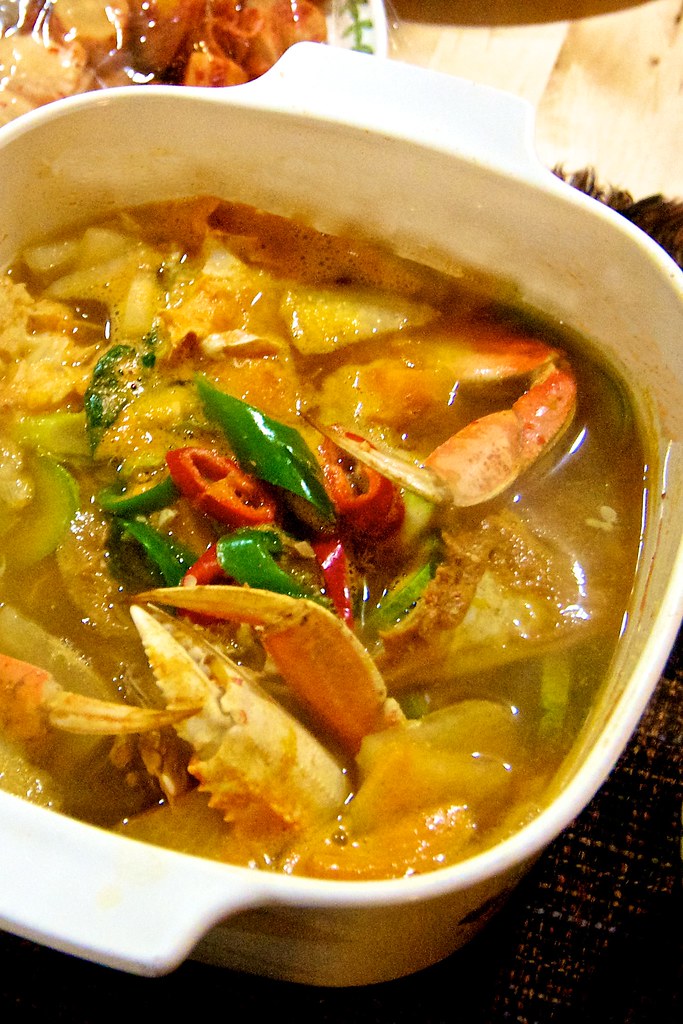
To complement the crab bibimbop, I also made crab soybean soup which is a popular delicacy in Korea. The combination of soybean paste and crabs is surprisingly delectable with a hint of fresh ocean aroma. Here is how you make it.

Ingredients for 4 servings

Stock:
anchovy (7-8, medium to large size)
dry kelp (3"x3")
water (10 cups)

Sauce:
soybean paste (1 tbl)
chili paste (1 tsp)
chili powder (1/2 tbl)
water (1/2 cup)
minced garlic (1 tbl)
ground ginger (1 tsp)
salt (1/2 tbl)
pepper (1/3 tsp)

Other:
Dungeness crab (1)
daikon radish (1/2)
kabocha (1/4)
zuchini (1/2)
Korean leek and or green onion (1 stalk)
green and red peppers to taste (2 each)

1.
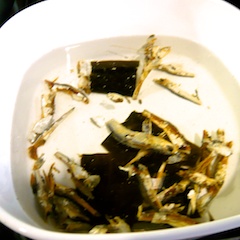
Make anchovy stock by boiling dry anchovies and dry kelp (kombu) in water. Fish out kombu when the water starts boiling and anchovies about 5 minutes later.
2.
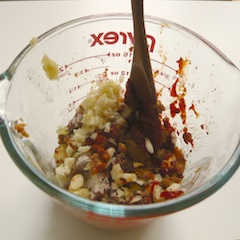
While the stock is underway on your stovetop, make a mixture of soybean and chili pastes, chili powsder and fresh ground ginger (see ingredients for sauce above).
3.
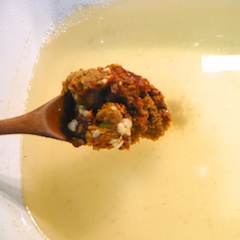
Add soybean/chili paste mixture from Step 3 to the anchovy stock from Step 1.
4.
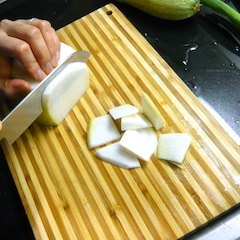
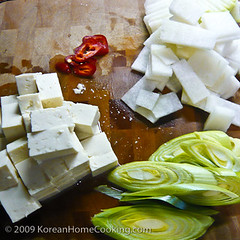
Slice daikon radish into 1/8" thick and about 1/2" square.
5.
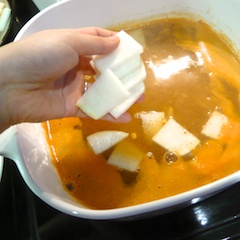
Add sliced daikon radish from Step 5 into soybean paste stock from Step 4 and boil for about 5 minutes until they are softened.
6.
Prepare other vegetables that usually go into soybean paste soup. I have kabocha and zuchini.
7.
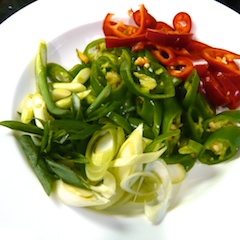
Slice green and red peppers and some Korean leek/green onion for garnish.
8.
Add fresh crabs that are washed and cracked in 4 parts. Skim off the foam as it develops.
9.
Add remaining vegetables and boil for 5 and then add scallion and pepper to garnish and then boil for another 2 to 3 minutes. Be sure not to overcook it, otherwise the shells will get too soft.

Wednesday, December 8, 2010

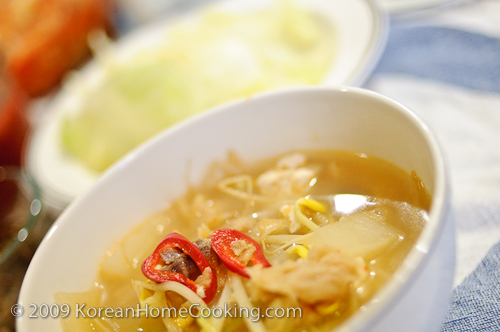
Bean Sprout Soup


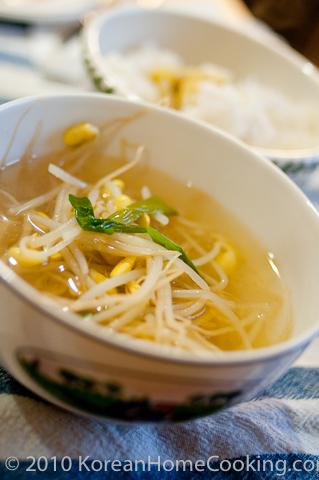
Easy clear soup recipe that anyone can make. This soup is very convenient to serve because it can be served either hot or chilled. When it's served cold, a bowl of bean sprout soup could taste very refreshing. I usually make this in a large quantity and serve it hot on the first day, and then from the second day and onward I simply take it out of the refrigerator and serve it chilled. Enjoy simple cooking :D

Ingredients for 1 serving:
bean sprout (1 bag or 300g)
water (5 cup)
scallion (1 stalk)
garlic (1 tsp, minced)
salt (1/2 tbl)
sesame oil (1 tbl)


1.
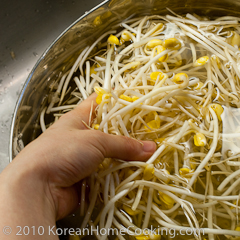
Wash the bean sprouts in water and drain.
2.
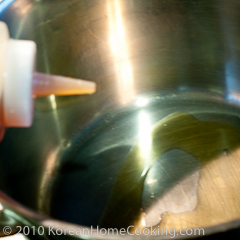
Heat a pot over medium heat and spread a tablespoon of sesame oil.
3.
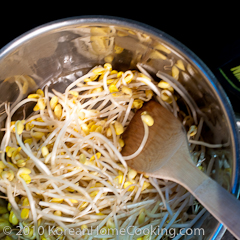
Stir-fry the bean sprouts in sesame oil. It should sizzle.
4.
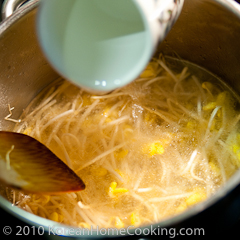
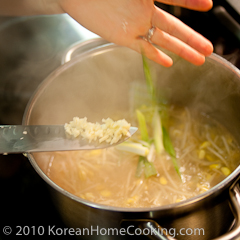
When the bean sprouts are half way cooked, add water and bring to boil. Cook for approximately 5 to 10 minutes.
5.
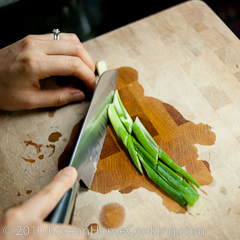
Cut the scallion into 1 to 2 inches long.
6.
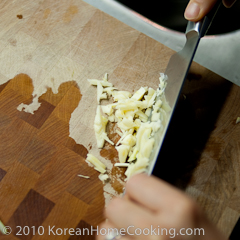
Minced the garlic.
7.
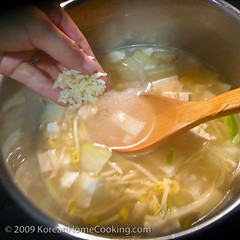
Add the scallion and garlic to the soup and boil for another minute or so.


Featured Items:

Monday, October 26, 2009

Birthday Girl's Breakfast


On my birthday Min made me this bowl of seaweed soup with mussels. Seaweed soup is known as a birthday soup in Korea. So, it was very sweet of him to make seaweed soup for me on my birthday. That's the birthday girl in the background :)

The seaweed soup has several variations, and it can be made with beef, chicken, clams, mussels, or scallops. The how-to-make part can be found in my previous post here
.

Friday, October 23, 2009

Dumpling Recipes

만두요리
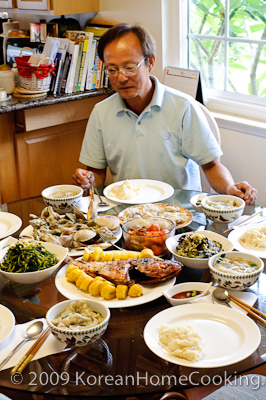
On our recent visit to my parents' place, as usual, my mom brought out so many dishes. Besides the home-made dumpling soup, my mom and dad had gone to the fish market in Newport Beach early in the morning and brought home the catch of the day. It's my dad in the picture. He has a habit of stop smiling when a camera is around...
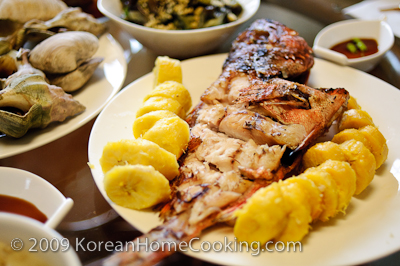
Rock cod is abundant in the southwest coast. When it's fresh, the texture of its flesh is so chewy and soft. This one is grilled and served with plantain. By the way, this dish looks very non-Korean, since neither rock cod or plantain is native to Korea.

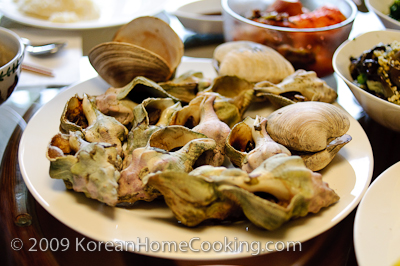
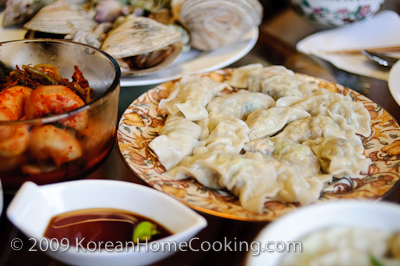
My parents literally open a seafood fare when we are visiting because Min doesn't like meat. To add some varieties as well as weights to the table, my dad had also bought some trumpet shells and clams in the market.

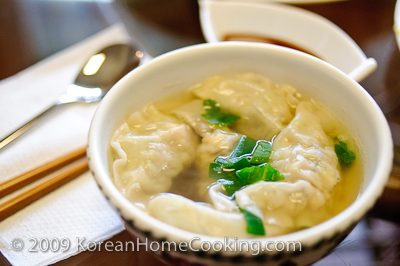
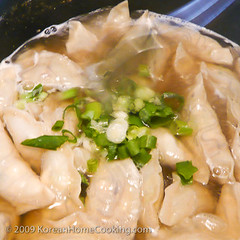
The main dish is actually this dumpling soup which is made with the fresh home-made dumplings. Once you've made dumplings, making of dumpling-soup is a breeze. See the instruction below for dumpling soup.


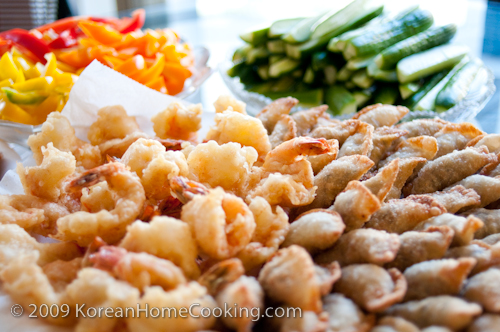
If you would like to enjoy as snacks, deep frying tastes good, too. Or you can enjoy water dumpling, so called mulmaandoo which is similar to steamed dumpling, but made by boiling them in water.


Ingredients for 6 to 7 people:

fresh or frozen dumplings (50)
dry anchovies (10-15)
Korean soy sauce (3 tbl)
scallion (4 stems, chopped)
garlic (5 cloves, minced)


1.
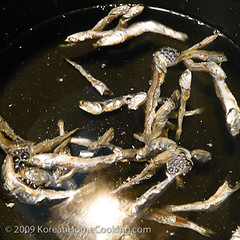
Make anchovy stock by boiling anchovies in water for 5+ minutes. Fish out anchovies afterwards.

2.
Add dumplings and the rest of the ingredients to the stock and bring to boil once again. Then serve.


Related Links:
How to make Dumpling

Tuesday, October 20, 2009

How to make Dumpling

만두[maan-doo]
My mom learned this recipe from my paternal grandmother, and I learned this recipe from my mom. I suppose my grandmother learned this from her mother or mother-in-law as well. I am so glad I can continue on my grandmother's (or who knows it could be my great great grandmother's?) recipe today.

Dumpling is widespread throughout Korea, but technically it is a specialty of the northern province. My grandma comes from Hwanghaedo, the north western part of Korea which is now North Korea. When the Korean war broke, my grandma took a refugee to the south with my dad and my aunt. My grandfather was supposed to join her in the south after taking care of some errands in north. But he never made it to the south, because the border was fenced off overnight between the south and the north right after they parted. This is a sad part of my family history which my generation doesn't have any memories of but our grandparents or parents do and have to live with them. I am sure many families in Korea share similar family histories.

This recipe makes 50 dumplings which serve about 5 to 6 people depending on one's appetite. When my mom makes dumplings, she usually makes several hundreds of them at once and freeze them for later use. When freezing the fresh dumplings, there is a two-step process which my grandma used, and my mom continues the same way. On a recycled styrofoam plate (which is found in a meat or vegetable packaging), place each dumpling at least 1/4 inch apart and freeze for 1 hour or so. After that, move all the dumplings into a small zipper bag and freeze them for a longer period. The initial freezing process prevents dumplings sticking to each other.


Ingredients for 50 dumplings (5-6 servings)

Fillings:
napa cabbage (1/4, julienne)
cabbage (1/4, julienne)
onion (1/3 large or 1 small, sliced)
ground beef (1/2 lb)
tofu (1 block, firm)
shitake mushroom (7, sliced)
mung bean sprout (1 package)
gyoza skin (50)
transparent vermicelli noodle/ dangmyun (1 handful)

Seasoning:
scallion (7 stems, chopped)
garlic (10 cloves, minced)
coarse salt (1 cup)
salt (2 tsp)
pepper (1/2 tsp)
sesame oil (1 tbl)


1.
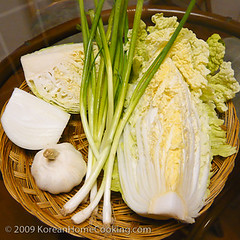
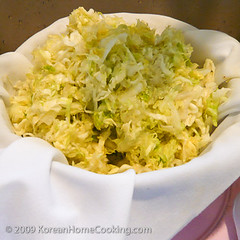
From the clockwise direction, main ingredients include scallion, garlic, onion, cabbage and napa cabbage.

2.
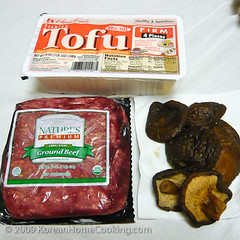
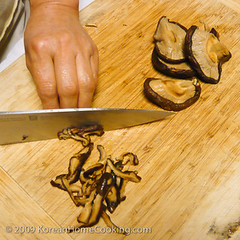
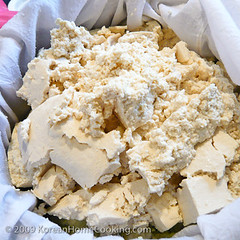
Also prepare ground beef, tofu and shitake mushroom.

3.
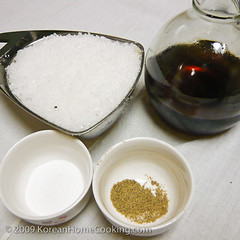
For the seasoning, prepare coarse sea salt, sesame oil and salt and pepper.

4.

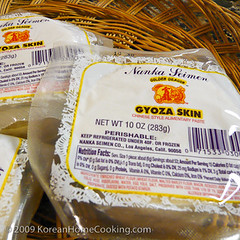
And gyoza skin. If you want home-made gyoza skin, simply make it with the dough of flour, water and some salt.

5.
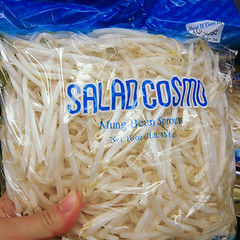
You would also need a bag of mung bean sprout.

6.
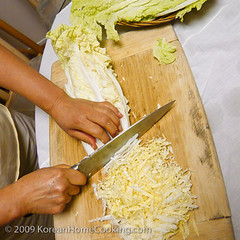
Julienne the cabbage and napa cabbage. Try to slice as thinly as you can. Otherwise, they are going to poke right through the gyoza skin.

7.
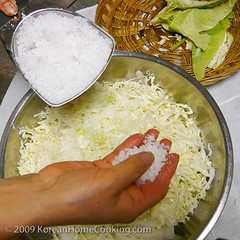
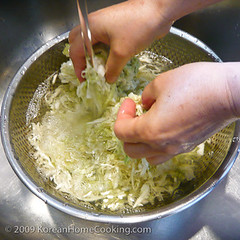
Sprinkle course sea salt over the cabbage and napa cabbage shreds, and set it aside for 2+ hours.

8.
Meanwhile, julienne other vegetables (onion and shitake mushroom).

9.
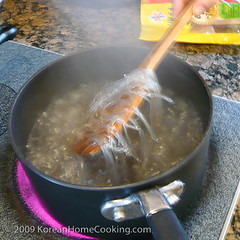
Also cook transparent vermicelli noodle (dangmyun) per instruction and cut 1-2" long.

10.
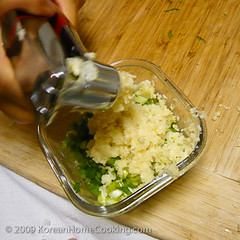
For the seasoning, prepare crushed garlic, chopped scallion, salt and pepper.

11.
Drain the water generated from salted cabbage and napa cabbage from Step 7. Wash the mix and drain completely.

12.
Place the cabbage and nappa cabbage in a thin coarse piece of cooking cloth.

13.
Add cooked vermicelli from Step 9 and crushed tofu to cabbage mix in Step 12.

14.
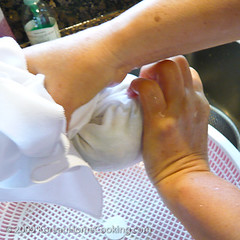
Twist the bag and completely squeeze out the water from the mix. My mom sometimes uses the laundry washer to borrow its spinning power. If you want to use washer, be sure to set it to the spinning cycle.

15.
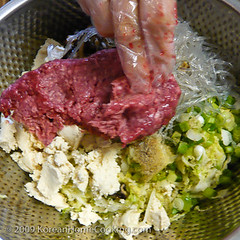
When the water is completely squeezed out, add ground beef and all the seasonings (i.e., garlic, scallion, salt, pepper, sesame oil)

16.
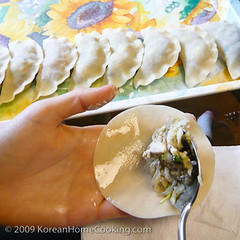
Place a spoonful of mix in the center of gyoza skin and seal the trim with water or egg white.

Related Links
Dumpling Recipes

Dried Pollock Soup

북어국[book-a-guk]
Dried pollock soup is famously known as hang-over soup in Korea. Neither Min or I am a heavy drinker, but according to some alcohol fans that I know, the soup tastes so good that it feels as if they are in the heaven after a night of hard drinking. I also read that dried pollack is rich in fish proteins and amino acids which protect the liver and detoxify the body. I may not know the real heavenly taste of this soup that some people claim, but this is a really-easy-to-make soup that goes along well with any rice meal.

Ingredients for 4 servings

water (6 cups)
dried pollock (1)
leek (1)
daikon radish (1/6)
tofu (1/2 block)
enoki mushroom
red pepper (1)
egg (2, beaten, optional)
bean sprout (2 handful)

Seasoning:
garlic (1 tbl, minced)
sesame oil (3 tsp)
Korean soy sauce (1 tbl)
salted shrimp sauce (3 tsp)
chili powder (2 tsp, optional)
salt and pepper


1.
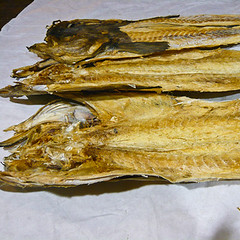
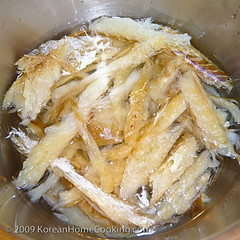
Dried pollak looks like this. Because of its yellow color, it is also called hwangtae meaning yellow pollack.

2.
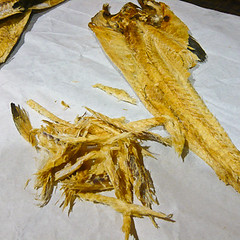
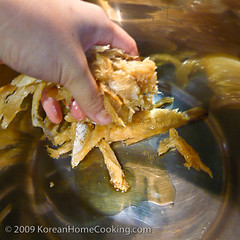
Strip the fillet into small pieces as shown in the picture.

3.
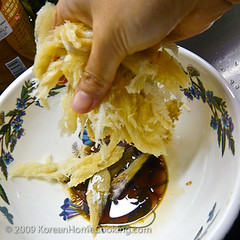
Soak the pieces in water for 10+ minutes.

4.
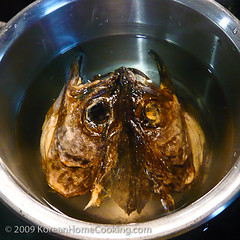
Meanwhile, boil the pollack head in water to make the pollack stock.

5.
squeeze out the water off pollack pieces in Step 3, and marinate them in soy sauce and sesame oil for another 5+ minutes.

6.
Prepare the vegetables.

7.
Stir-fry the pieces from Step 5 in sesame oil.

8.
Add water to Step 6 along with vegetables from Step 7 and seasonings such as garlic, salted shrimp sauce, salt and pepper, etc. Boil for 15+ minutes. Optionally, you can stir in beaten eggs into the soup.

Related Links
Seoul Gom Tang
Grilled Dried Pollack in Spicy Sauce